We’re coming up on July 4, the 249th anniversary of the signing of the Declaration of Independence here in the United States. Here in Arizona, where I live, as well as throughout the 50 states that make up this nation, this day is a big deal. Depending on who you are, Independence Day means hot dogs, family picnics, parades, red, white and blue everywhere. Or it could be the opportunity to remember one very hot day in Philadelphia in an era with no air conditioning, when 56 men put their signatures to a document that very likely could have landed them in prison—if they were lucky. They knew full well that, as Ben Franklin succinctly said it, if they didn’t agree to hang together, they most assuredly would hang separately.
They had everything at stake. Lives. Fortunes. Sacred honor. The non-existent nation itself, that existed only in each man’s imagination—each one with a different vision of what freedom might look like. One thing they all agreed on: freedom didn’t look like prison.
And yet, for me, prison is exactly where I found mine.
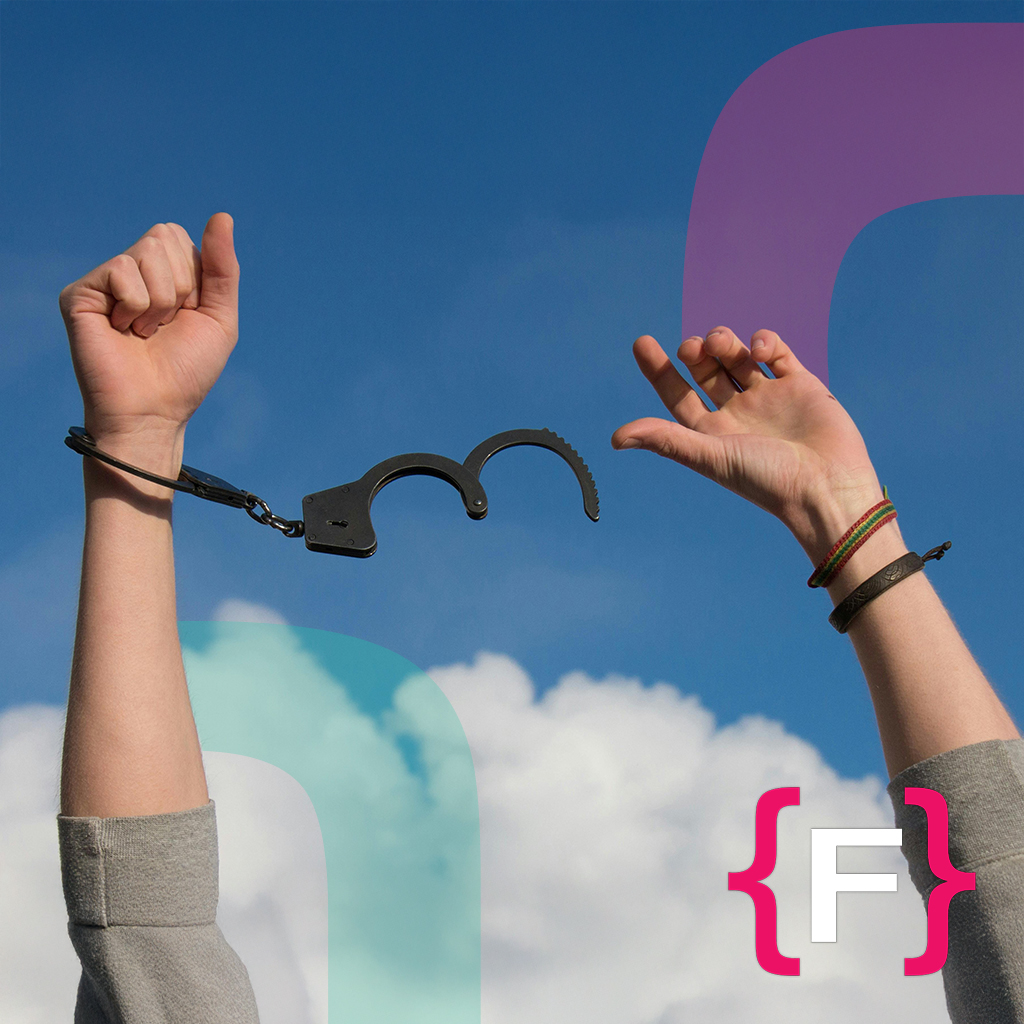
This year, while the nation celebrates 249 years of independence, I’ll quietly mark 29 years since my arrest on July 10th. What felt like the end of everything turned out to be the beginning of my own personal declaration of independence—not from a government, but from fear, shame, and the chaos I had let control my life. My freedom didn’t come with fireworks. It came in handcuffs. And it saved me.
My freedom began in prison. Well, to be more accurate, it began seven days before. I was stuck in a life I couldn’t escape. Living in chaos, dealing drugs, constantly looking over my shoulder. I was terrified—terrified of being hurt, of being arrested, of losing my two little boys. The truth is, I was already in prison long before the handcuffs. A mental prison. An emotional one. Even physically, I felt it in my body—tight chest, racing heart, the constant exhaustion that comes from living in fear 24/7.
One day, I just couldn’t take it anymore. I ducked into the garden at a neighborhood church and did something I hadn’t done in a long time: I dropped down on my knees and I prayed. Not a fancy prayer. Just a broken one. “I surrender. I can’t do this anymore. Please, help me.”
One week later, I was arrested. The one memory of that day that I’ll carry with me always is the image of my two little boys, their little hands leaving fingerprints on the windows of the police car’s backseat, where they could just barely see their mommy through the dim light. They, of course, were too young to understand. They just knew something bad was happening right then and there. To their mommy. To them. But in that moment, I thought it was all over—that I was losing my freedom for who knows how long. (Turns out, the judge said seven years.)
But looking back now, that was actually the moment my freedom began. Not all at once, of course. But that was the turning point. Like those 56 men in Philadelphia in 1776, I had no guarantees. No promises of what the future would hold. It would take as long as it would take.
I ended up serving seven years. But during that time, piece by piece, layer by layer, I started to break free—not from prison, but from the mindset and limiting beliefs that had trapped me long before the bars ever did.
“Michelle, you’ve got a choice. You can do your time however you want. You can spend it worrying about how to fit in, trying to be part of the in-crowd… or you can use it to turn your life around and become a better version of yourself.”
That was unexpected. The first freedom I discovered behind bars was the freedom of choice. I was free to choose how to use all those years that stretched front of me. Was I going to do my time, or use my time? Would I waste it trying to fit-in? Or was I going to use to become a better person? My counselor made it plain: Who I was going to be at the end of my sentence depended on the choice I made now. And that choice was one I had the freedom to make.
The second freedom I discovered was the freedom to define who I really am.
For the first time in my life, I wasn’t being shaped by the expectations of everyone around me—family, friends, coworkers. I had spent years seeing myself through their eyes, playing the roles they assigned me. But in prison, all of that noise went quiet.
I was finally free from their opinions, their interpretations. Free from their limiting beliefs about what life should look like.
And in that space, I got to choose me. I got to figure out who I was—not for them, but for myself.
The third freedom was freedom from the fear of failure.
There’s something incredibly liberating about epic failure. I had already failed in every aspect of life. So, there was nothing but up from there.
All I could do at this point was take it one step at a time and aim for small wins. Once you say, “Hey, I failed at this,” without shame or excuse—you take the power back. You’re free to set that failure down and walk away from it.
Because it doesn’t define you anymore. You get to decide what comes next.
The fourth freedom I found was the freedom that comes from realizing wasn’t alone.
One of the first things I learned in prison was that everyone has a story. A struggle. A before and an after. Different details, same pain. Some better, some worse, some just different. But all of them messy, complicated, and real.
That’s when it hit me: there are all kinds of prisons, not all of them have bars. Some people are trapped in addiction. Some in fear. Some in the weight of never feeling good enough. I had spent so long believing I was the only one struggling, the only one who had screwed it all up. But I wasn’t. Not even close.
That realization set me free. I wasn’t some uniquely broken failure—I was just human. Like everyone else.
The fifth freedom was peace of mind that comes with acceptance.
The fifth freedom I found was the peace of mind that comes with acceptance.
When my attorney and I were working through a plea deal, I still believed I had some control. We had a plan—a strategy we thought would get me a lighter sentence.But after I stood up in court and pleaded guilty, the judge came back with the maximum: seven years in prison. No probation. No time served. Just seven years.
I was stunned. What the hell just happened? This was not part of the plan!
And then—something unexpected. A wave of calm. An understanding that everything happens for a reason. I realized there was nothing I could do to change it. So, I accepted it—and committed to making the best of it. Not because I liked it, but because it was real. And it was mine. And in that moment, I stopped spiraling. I stopped fighting. I started breathing again. And I was finally able to move forward, live in the moment, and take the first real step toward rebuilding my life.
The sixth freedom I found was the freedom to set boundaries.
I’m not saying we get to blame other people for our choices—we don’t. I owned mine. But let’s be honest: the people we let into our lives matter. Some will lift you up. Some will drag you down. And learning to tell the difference is everything. Of course, there are people who will always be part of our lives—parents, siblings, partners, kids. Boundaries with them can be more complicated. But even in those relationships, we still have a say.
We get to decide who gets access to our energy, our peace, our future.
We get to protect the progress we’ve made.
We get to say: This is my line. Cross it, and you’re out.
That’s not selfish. That’s survival.
Everyone who’s studied the lead-up to the Declaration of Independence knows this: those 56 men didn’t exactly hold hands and sing kumbaya. They argued. They annoyed each other. They splintered into camps fueled by ego, fear, ambition, philosophy—even loyalty to the very crown they were breaking away from.
But they showed up. They stood for something.
And they demanded just three things: life, liberty, and the pursuit of happiness.
Me? I’ve got six:
Choice. Authenticity. Fearlessness of failure. Connection. Acceptance. Boundaries.
We all wonder what those founders would think of the United States today. I’m sure the reviews would be… mixed. But I’d like to believe Ben Franklin would be proud we’re still standing. That we’ve managed to hold onto this messy, beautiful, complicated thing called freedom.
And I’d hope they’d be glad to see that we, generations later, are still defining freedom for ourselves—especially the ones we almost lost.
So yeah, 250 years is coming. And there’s a big party in the works. You in?