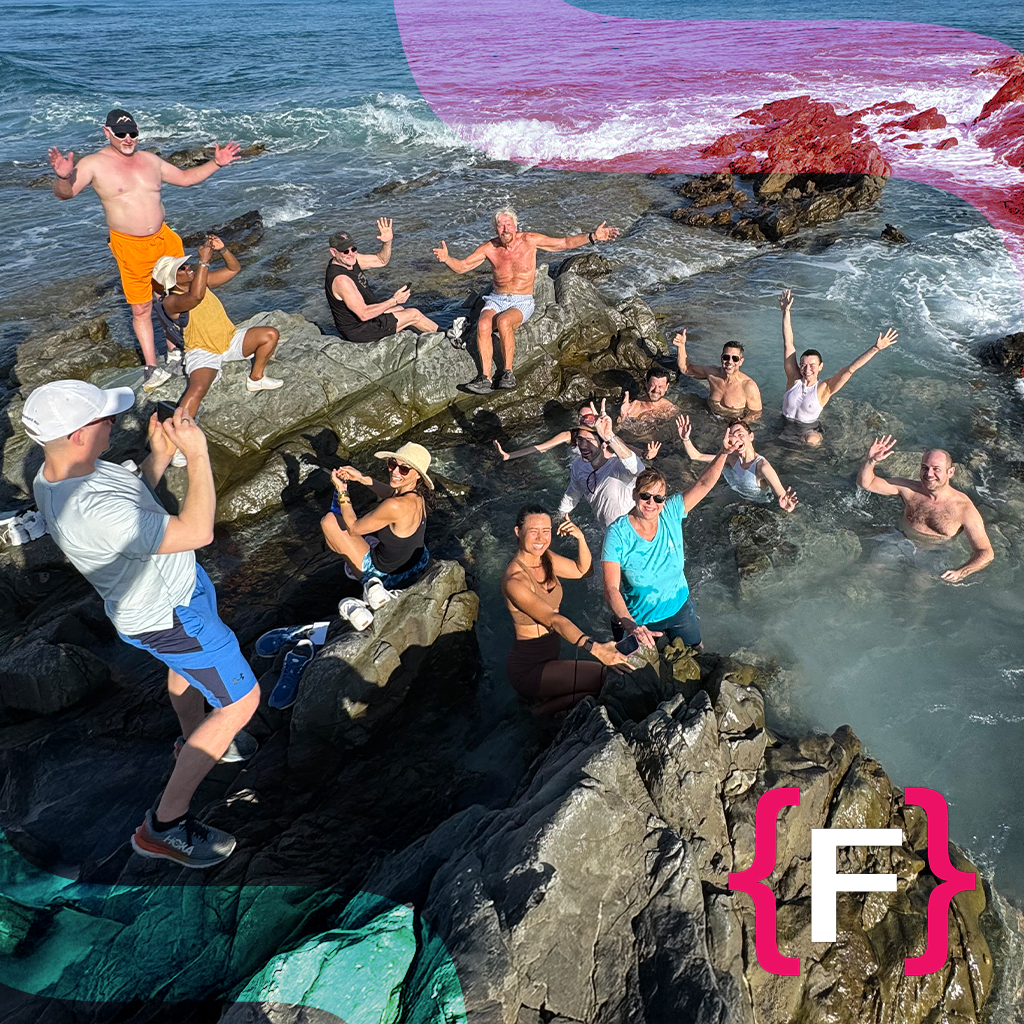
I was on a group hike the other day when I found myself eavesdropping on the two guys ahead of me. One was passionately explaining his ideas about space travel and the oil industry (which I didn’t understand one bit), and the other, listening intently, was Sir Richard Branson.
And yes, our hike was around — Necker Island, no less.
That’s when the thought hit me like a Phoenix heat wave: How did I get here?
Seven years in prison doesn’t exactly read like a stepping stone to morning hikes with billionaires and world-changers. And yet, there I was. The question wasn’t just logistical — it was existential: Do I belong here?
That night at dinner, I chatted with the space travel guy. “The whole time I was talking to Richard,” he said, “I kept thinking, How did I get here?”
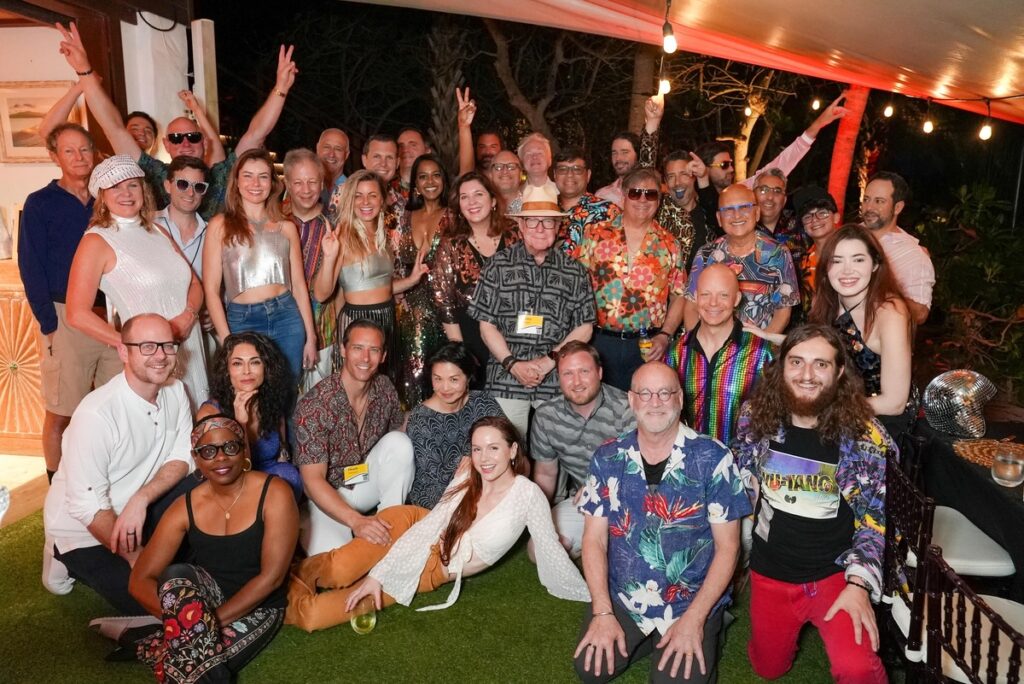
As I met others, I realized — we were all thinking the same thing. Each of us invited to this exclusive, world-class experience… somehow convinced we were the exception.
Welcome to Imposter Island — population: everyone, everywhere, all the time.
Yes, it was an invitation-only event. Which means we did belong there. But imposter syndrome doesn’t care. It whispers that you slipped in by accident. That everyone else has the credentials — and you just got lucky.
We were all struggling to believe the truth: We were enough. We are enough. And while we silently hoped our discomfort wasn’t showing, the truth is… everyone else was doing the same thing.
And just when that uncomfortable inner voice started to settle, they hit us with a group exercise: a self-assessment.
Rate yourself from 1 to 10 in ten areas of your life — physical health, mental health, romantic relationship, friendships, family, purpose, wealth, spirituality, fun, and impact. Then share your scores with a partner.
Now, I love self-assessments and personal evaluations. Reflection is my jam. But sharing the raw, unfiltered truth with another human?
Cringe.
I just wanted to find a back door and disappear.
One of the coaches gently asked, “What would a 10 actually feel like for you?”
Something in me softened. Okay. I’ll give it a shot.
Part One: The Now
At the end of the retreat, we were asked to choose 3–5 areas to focus on moving forward. That’s when the resistance crept in.
Not fear. Not panic. Just that subtle urge to shrink back. Play it safe. Keep it surface-level.
Before I could vanish into the crowd, someone made eye contact. (Damn.) She invited me to partner with her — and then asked if we could record our session.
I was stuck. On an island. Literally.
When it was my turn, I picked the areas I felt the weakest in: physical health, friendships, romantic relationship, and fun.
And when I started speaking, something cracked open. My voice shook. I stammered. I cried. But I told the truth — honestly, fully, and with everything I had.
Part Two: The Future
Then came the second part of the exercise:
Pretend it’s five years later, and you’re reconnecting with someone you haven’t seen since. Speak as if everything you envisioned has already come true.
And suddenly, I saw it all:
My family — connected.
My business — scaling with impact.
My friendships — rich and joyful.
My relationship with my husband — vibrant and intimate.
I wasn’t describing a fantasy. I was declaring a future.
I was speaking it into existence.
The First Challenges Present Themselves
Big ideas feel totally doable under tropical ceiling fans and the shade of a banyan tree, with turquoise waves sloshing the shore like a soundtrack to your transformation.
But real life?
It has a way of snapping you back into, well… real life.
The flight attendant reminding you about seat backs and tray tables.
The thud of jet tires hitting the runway.
The smell of aviation fuel.
The familiar chaos of the Phoenix airport.
Just like that, Necker Island felt a million miles away.
The first test came fast. My husband and I had one of those conversations — the kind where he gently (but clearly) shared that he was starting to feel like an outsider to my ambition.
I showed him the video of my five-year vision. Through tears, I told him he wasn’t an afterthought. He was the foundation. My best friend. The center of the life I’m building — not someone I’m leaving behind.
The next day, I was back in the office, neck-deep in meetings and deliverables when a message popped up:
“Are you still in for skiing tomorrow? For my birthday?!”
Cue guilt. Cue overwhelm. Cue the reflexive no.
I had forgotten my promise. I was behind on everything. My calendar was chaos. I had no business leaving again.
And then I remembered: two of my lowest self-assessment scores were friendship and fun.
My five-year plan painted a picture of a life rich with adventure and connection.
So… I cleared my calendar. We went skiing.
The next morning, as we gathered with the rest of our friends to continue the celebration, I said out loud, “I need more of this in my life.”
And just like that, we started planning monthly hikes.
You might be thinking: Ski trips? Birthday parties? One-on-ones with your spouse? These aren’t transformational moments. Where’s the paradigm-busting a-ha that yanks your five-year vision into the present?
Growing to Fit the Future
Exactly.
There’s no paradigm-busting a-ha. No lightning bolt. No single summit.
We don’t shake imposter syndrome by arriving somewhere magical — we dissolve it through small, steady choices. Tiny realignments. Simple moments of courage and truth.
Moment by moment. Day by day.
In my case, it was one simple decision — a decision that aligned with the life I had envisioned while hiking around Necker Island with Richard Branson — and it rippled across everything back in Phoenix: my joy, my relationships, my mental and physical health.
This wasn’t a mindset shift. It was a life shift. And life doesn’t transform in one dramatic gesture. It unfolds, fast and slow, one choice at a time.
This is what it means to grow to fit your future.
Not by willpower. Not by perfection. And definitely not by hustling harder.
Because when we try to change everything at once, we don’t outgrow imposter syndrome — we drag it with us.
But when we choose alignment — when we let our actions, our energy, and our voice reflect the life we know we’re meant to live — we start to belong.
And then, five years from now (maybe sooner), when we find ourselves sitting among empowered, purpose-driven, world-changing humans, we won’t ask:
How did I get here?
Because the answer will already be clear.
Of course I belong here. This is where I fit.